

Operable wall panel thickness is only one of several properties that influence strength, acoustics and appearance. A thicker panel does not automatically mean a better wall for every space. The complete construction, tested performance, height, operating weight and finish should drive the choice.
Clear decision-making
Product and installation
Useful for Malaysia sites
Before requesting a quote
Panel dimensions and specification for Malaysia projects
THE COMPLETE GUIDE
The phrase operable wall panel thickness is most useful when it leads to a clear design decision. Instead of selecting on appearance or price alone, assess the intended room use, the system’s documented capabilities and how the finished space will be operated over time. This guide focuses on practical questions owners, architects and project teams can raise before making a commitment.
Operable wall panel thickness is only one of several properties that influence strength, acoustics and appearance. A thicker panel does not automatically mean a better wall for every space. The complete construction, tested performance, height, operating weight and finish should drive the choice.
Three important areas to understand
Use these considerations to evaluate operable wall panel thickness alongside the selected product documentation and the requirements of your site.
Separate thickness from acoustic rating
Panel depth gives room for internal construction, but results depend on face materials, core, seals and the tested assembly. Two panels of similar thickness can have different performance. Compare verified acoustic data rather than relying on dimensions as a shortcut.
Account for opening height
Tall panels may need additional stiffness, suitable framing and different handling arrangements. Manufacturers publish dimensional limits by system. The project designer should check height, width, deflection and support requirements together.
For procurement, ask the proposed supplier to show how this point is addressed in the actual system drawings or specification. If an option is described only in a sales brochure, clarify the product series, operating conditions and limitations before approving it.
Consider panel weight and operation
A heavier panel can affect carrier loads, track support and the experience of the person moving it. A smooth-moving system is important in spaces that change layout frequently. The intended operator and changeover frequency belong in the specification brief.
Actual details depend on manufacturer instructions, site conditions and the agreed project scope.
Important design and operating considerations
04 / Match thickness to space planning.
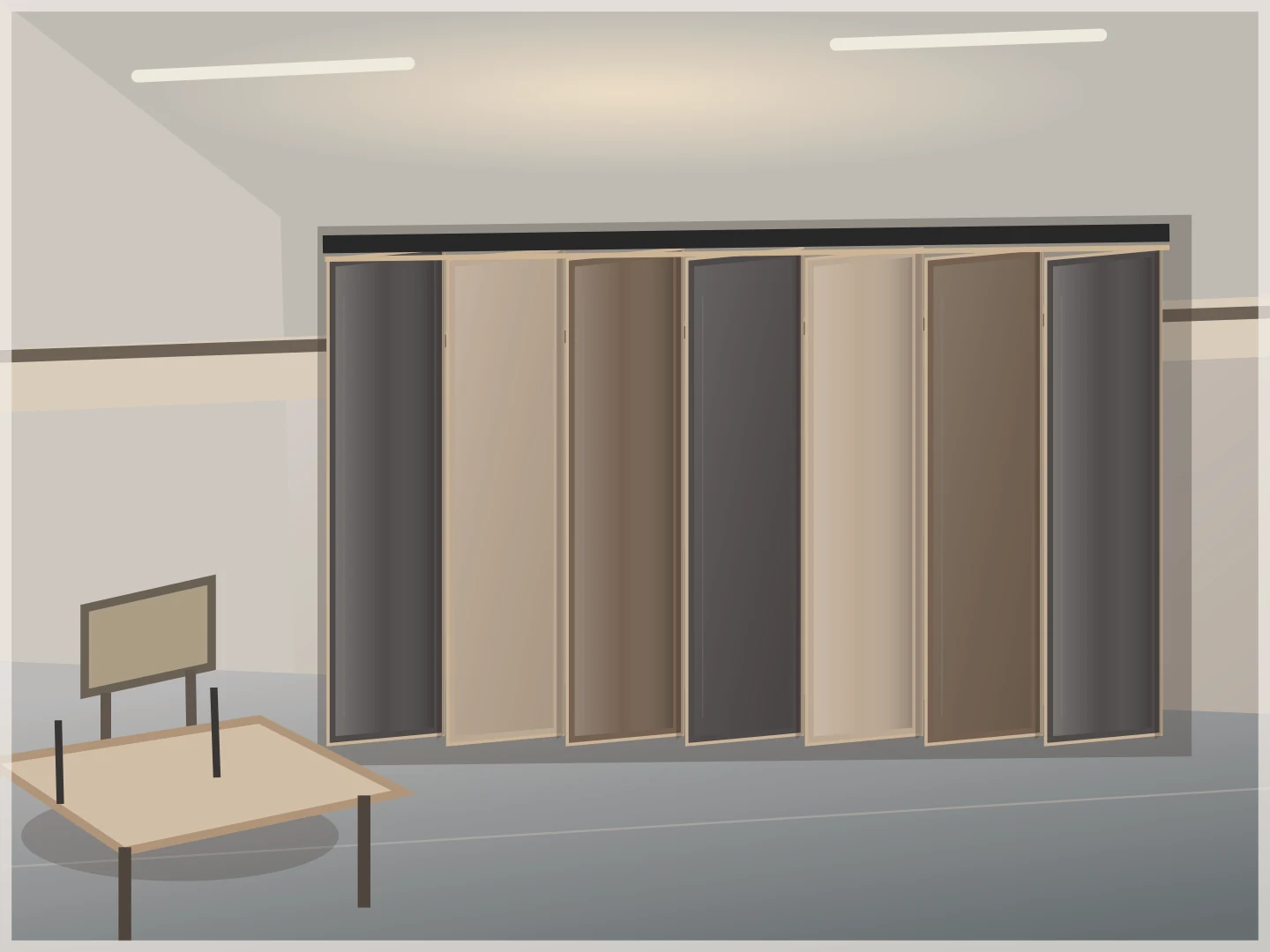
Panel depth influences the folded or parked stack and available storage area. It also affects wall-to-wall details and the relationship with doors or joinery. These dimensions should appear on coordinated architectural drawings.
For procurement, ask the proposed supplier to show how this point is addressed in the actual system drawings or specification. If an option is described only in a sales brochure, clarify the product series, operating conditions and limitations before approving it.
05 / Ask for a full technical schedule.
An informative quotation lists panel build-up, nominal thickness, size limits, tested rating where relevant, suspension, seals, finish and warranty. That schedule enables comparison on like-for-like terms and reduces late design surprises.
A practical project scenario
For a four-metre-high training hall, request both the system’s approved height range and the combined panel load before comparing alternative thickness options.
At concept stage, compare at least two viable layouts and document the assumptions. Mark the wall line, full panel stacking envelope, adjacent doors and any structure or services that may require modification. During the supplier review, ask which details remain provisional and who will verify them. A coordinated scope is more valuable than a low quotation that excludes key installation work.
Review real opening dimensions, daily operation, engineering responsibilities and site constraints before finalising the specification.
Five checks before you approve the design
Use the following checks when reviewing a supplier proposal and coordinating your project team in Malaysia.
Project-specific dimensions
Confirm final floor-to-ceiling height, opening width and exact position of the closing line. A concept drawing is not a substitute for verified dimensions.
Available structure and ceiling space
Have suitable professionals review the support conditions, adjacent construction and any conflicting building services before ordering.
Intended room use and operating frequency
Describe who will operate the wall, how frequently the space changes and which activities must run concurrently.
✓ Performance requirements and documentation — Request the exact system information, relevant tests where needed and clear inclusions or exclusions in the proposal.
✓ Finishes, cleaning and maintenance access — Choose finishes with the actual usage and cleaning regime in mind, and plan access for inspection and repairs.
Questions worth asking a supplier
Ask for the relevant drawings, installation scope, operating sequence and maintenance responsibilities in writing. If acoustic or structural performance is critical, request the appropriate technical evidence and independent professional review. Record any item described as “by others” so there is no uncertainty about who must deliver it.
Also ask how the selected option changes the room when panels are stored, not just when the wall is closed. A complete quotation should explain panel layout, track and suspension requirements, finish selections, access for installation and the proposed handover demonstration.
✓ Request product-specific specifications
✓ Confirm responsibilities and exclusions
✓ Review drawings and site measurements
✓ Confirm installation and commissioning
✓ Keep records for maintenance
Operable Wall Panel Thickness: What Should You Choose? — FAQ
Is the thickest panel always best?
No. The correct choice balances verified performance, system limits, weight, space and budget.
Does panel thickness determine STC?
It can influence the assembly, but STC must be supported by testing of the relevant complete configuration.
Will a thicker panel need more ceiling support?
Loads may increase, but the actual design must use manufacturer weights and engineering calculations.
Editorial note: This article is for general planning in Malaysia, not a structural or acoustic design certificate. Confirm product claims and statutory requirements with the relevant professionals.
Make the most of every square metre.
Share the room purpose, opening dimensions, proposed layout and your priorities. Start with a practical solution that can be reviewed against real site conditions.
Explore Operable Wall Malaysia
For a quotation, use the contact options on the main service page. Scope, suitability and availability require confirmation.