

Poor track alignment can make panels difficult to move or position. A good diagnosis considers the support structure, carrier system and installation condition—not just whether a track looks straight.
Know what matters
Plan carefully
Review before buying
Get clear answers
Understanding moveable wall track alignment
Poor track alignment can make panels difficult to move or position. A good diagnosis considers the support structure, carrier system and installation condition—not just whether a track looks straight.
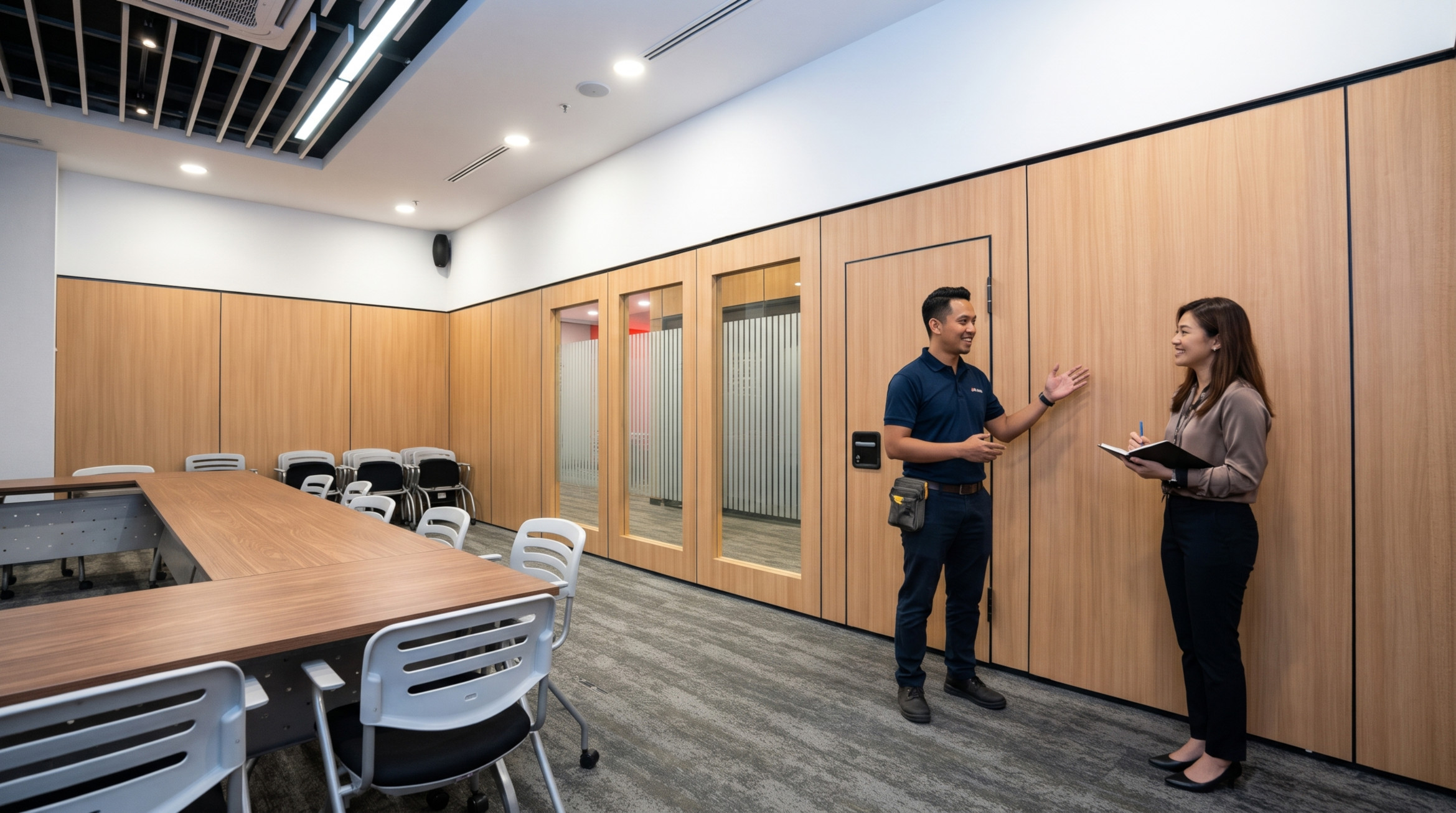
For a successful project, begin with the room’s intended activities, rather than selecting a partition from a photograph. Agree on the open and closed configurations, who will operate the wall, what privacy is required and where the panels will be parked. These choices influence the track design, site coordination and supplier quotation.
This guide highlights practical decisions for facilities managers, developers, architects and building owners in Malaysia. It is general information rather than a substitute for project drawings, product-specific test evidence or approvals.
Three decisions that shape the result
These considerations are specific to moveable wall track alignment and worth discussing with the project team.
Recognise early warning signs
Look for binding, unusual rolling noise, inconsistent panel position or the need for increasing force. Record where the behaviour occurs and whether it affects one panel or all panels. Do not force the wall because this can damage running gear.
Separate track issues from other causes
What feels like misalignment may be caused by a damaged carrier, debris, settlement or panel adjustment. Qualified service personnel should inspect the assembly using manufacturer procedures before choosing a repair.
Consider the overhead support
Track geometry depends on suitable support and fixings. Any movement or load-related concern needs professional assessment. Cosmetic ceiling components are not an acceptable reference for alignment.
Specifications, suitability and installation details depend on the actual product and building.
Include alignment checks at handover
Commissioning should test each panel through the full travel route and stack. Keep the installer’s acceptance record and document any adjustments to prevent recurring disputes after occupation.
The right next step is to request a dimensioned proposal showing the wall line, panel stacking area, operating clearances and interfaces with the existing building. Ask which requirements are confirmed, and which still need checking by the responsible consultant or supplier.
A Malaysia project planning scenario
A conference centre reports that one panel jams near a track junction after several months of use. A technician should inspect the junction, carrier and support conditions rather than simply applying lubricant to the visible track.
This is a planning example, not a claim about an actual completed project. Finalise the proposal only after measurements, operational requirements and technical responsibilities have been documented. The result should be judged by how the room works in daily use as well as how it looks in photographs.
What matters when planning moveable wall track alignment?
Choose a suitable solution by checking how the room will operate, the building interfaces, and what the supplier can document. For Malaysian projects, drawings and site measurements should guide the specification rather than appearance alone.
Record exactly where binding or noise occurs. Also review how the selected system will be installed, operated and maintained.
Any fire, structural, acoustic, accessibility or healthcare performance must be verified against the chosen system and the requirements for the particular building.
Key decisions for moveable wall track alignment projects
Recognise early warning signs
Separate track issues from other causes
Consider the overhead support
These points can help guide a project brief; final specifications depend on the chosen wall system and verified site constraints.
A checklist for comparing project proposals
When reviewing quotations for moveable wall track alignment, compare documented scope and site readiness—not just the quoted price. This table gives the project team three areas to discuss with potential suppliers.
For approvals or regulated work, involve the appropriate qualified consultant or authority. Supplier documentation must match the actual product and installation configuration.
Your project checklist
Use these points when briefing a supplier about moveable wall track alignment.
Record exactly where binding or noise occurs
Take panels out of service if unsafe operation is suspected
Check the product manual before any lubrication or adjustment
- Record exactly where binding or noise occurs
- Take panels out of service if unsafe operation is suspected
- Check the product manual before any lubrication or adjustment
- Arrange a qualified inspection of carriers, joints and support
- Retest all panels after corrective work
Where structural, fire, accessibility or healthcare requirements apply, involve the relevant qualified professionals and obtain the necessary approvals.
Need help turning these points into a proposal? Start with the Operable Wall Malaysia solutions page and prepare your opening dimensions and proposed room layout.
Questions about moveable wall track alignment
Can I straighten the track myself?
Track adjustments may affect load-bearing components; use qualified service personnel.
Does squeaking always mean misalignment?
No. It may result from contamination or component wear; inspection is needed.
How often should tracks be checked?
Follow the manufacturer’s maintenance plan and inspect sooner if operation changes.
What should be included in a quotation for moveable wall track alignment?
Ask for a project-specific scope that describes the wall layout, selected system, dimensions, finishes, installation interfaces and any stated exclusions.
When should moveable wall track alignment be reviewed during a Malaysia project?
Review this topic before the layout and ceiling or floor interfaces are finalised. A site survey helps establish measurements and coordination responsibilities.
Can a supplier brochure replace project verification?
No. Brochures are a starting point, but site conditions, available test documents where relevant, and installation details must be assessed for the actual building.
Ready to discuss your moveable wall project?
Share your opening dimensions, building location and intended room usage. Review suitable solutions, installation requirements and next steps for a Malaysia project.
Explore Operable Wall Malaysia →