

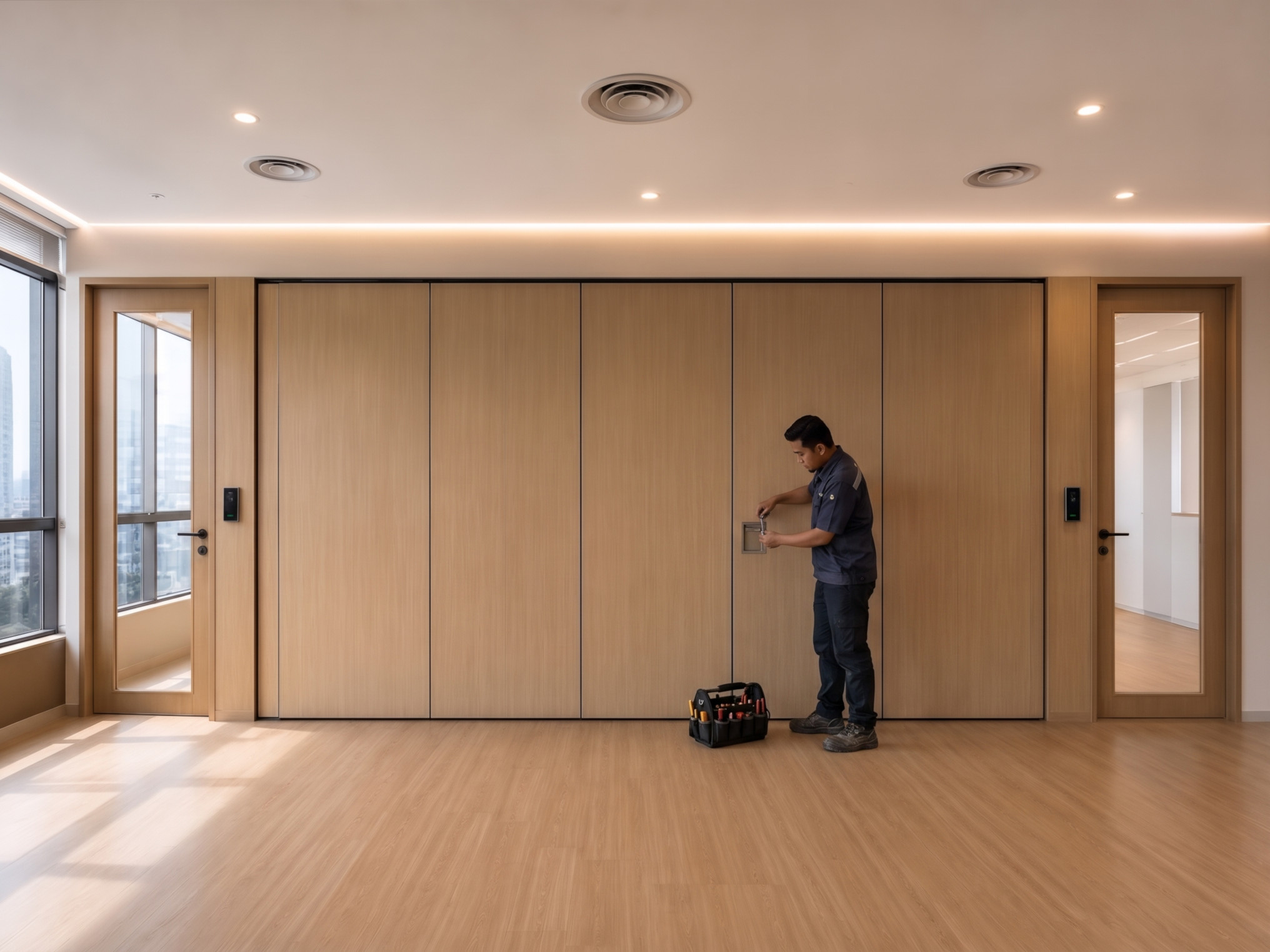
The decision between an operable wall vs fixed partition is not simply about which looks more premium. It is about how often the layout changes, how much acoustic separation is needed and what the building can support. Fixed partitions provide a permanent boundary; operable systems allow a space to be opened and divided as programmes change.
Clear decision-making
Product and installation
Useful for Malaysia sites
Before requesting a quote
Choosing the right partition for Malaysia projects
THE COMPLETE GUIDE
The phrase operable wall vs fixed partition is most useful when it leads to a clear design decision. Instead of selecting on appearance or price alone, assess the intended room use, the system’s documented capabilities and how the finished space will be operated over time. This guide focuses on practical questions owners, architects and project teams can raise before making a commitment.
The decision between an operable wall vs fixed partition is not simply about which looks more premium. It is about how often the layout changes, how much acoustic separation is needed and what the building can support. Fixed partitions provide a permanent boundary; operable systems allow a space to be opened and divided as programmes change.
Three important areas to understand
Use these considerations to evaluate operable wall vs fixed partition alongside the selected product documentation and the requirements of your site.
Flexibility is the primary difference
A fixed wall is appropriate when room boundaries rarely change and services can be planned permanently. An operable wall makes more sense when a venue alternates between small sessions and large gatherings. The value lies in the actual operating schedule, not in the novelty of the mechanism.
Compare acoustic objectives carefully
Either option can offer useful noise control if its complete assembly is designed properly. A solid permanent partition may be simpler to detail around edges and above ceilings. An operable wall adds moving joints, closing seals and additional potential sound paths. Ask for system-specific test reports and installation details.
For procurement, ask the proposed supplier to show how this point is addressed in the actual system drawings or specification. If an option is described only in a sales brochure, clarify the product series, operating conditions and limitations before approving it.
Consider the overall project scope
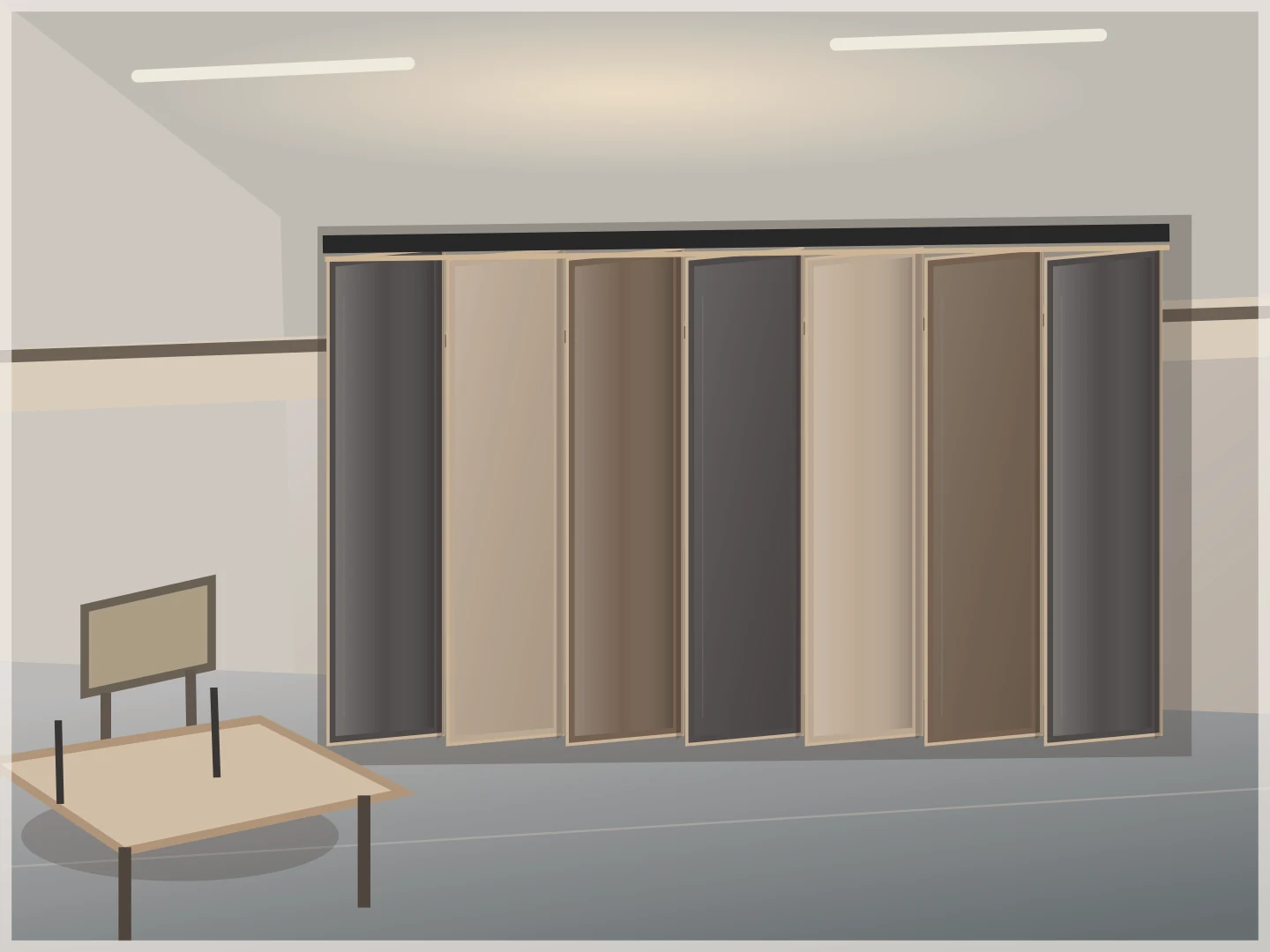
A fixed partition may involve framing, finishes, doors, electrical changes and potential demolition later. An operable wall involves a track support design, movable panels, a stack location and maintenance. Initial quotations should be compared on complete scope rather than panel price alone.
Actual details depend on manufacturer instructions, site conditions and the agreed project scope.
Important design and operating considerations
04 / Look at daily operations.
An operable wall needs people who understand how to deploy and store it. A fixed partition usually needs less operational attention. In a venue with multiple events each day, the time needed to change layouts is an important part of the decision.
For procurement, ask the proposed supplier to show how this point is addressed in the actual system drawings or specification. If an option is described only in a sales brochure, clarify the product series, operating conditions and limitations before approving it.
05 / Plan for long-term adaptation.
Room functions can change over the lifetime of a hotel, school or corporate office. Choose an operable layout only where that flexibility has a real operating benefit. If the wall will remain closed nearly all the time, a well-detailed permanent partition may be more practical.
A practical project scenario
For a hotel ballroom that hosts weddings and seminars, list the revenue and scheduling benefits of dividing a hall. For a private records room that must stay separate every day, a fixed partition may be easier to justify.
At concept stage, compare at least two viable layouts and document the assumptions. Mark the wall line, full panel stacking envelope, adjacent doors and any structure or services that may require modification. During the supplier review, ask which details remain provisional and who will verify them. A coordinated scope is more valuable than a low quotation that excludes key installation work.
Review real opening dimensions, daily operation, engineering responsibilities and site constraints before finalising the specification.
Five checks before you approve the design
Use the following checks when reviewing a supplier proposal and coordinating your project team in Malaysia.
Project-specific dimensions
Confirm final floor-to-ceiling height, opening width and exact position of the closing line. A concept drawing is not a substitute for verified dimensions.
Available structure and ceiling space
Have suitable professionals review the support conditions, adjacent construction and any conflicting building services before ordering.
Intended room use and operating frequency
Describe who will operate the wall, how frequently the space changes and which activities must run concurrently.
✓ Performance requirements and documentation — Request the exact system information, relevant tests where needed and clear inclusions or exclusions in the proposal.
✓ Finishes, cleaning and maintenance access — Choose finishes with the actual usage and cleaning regime in mind, and plan access for inspection and repairs.
Questions worth asking a supplier
Ask for the relevant drawings, installation scope, operating sequence and maintenance responsibilities in writing. If acoustic or structural performance is critical, request the appropriate technical evidence and independent professional review. Record any item described as “by others” so there is no uncertainty about who must deliver it.
Also ask how the selected option changes the room when panels are stored, not just when the wall is closed. A complete quotation should explain panel layout, track and suspension requirements, finish selections, access for installation and the proposed handover demonstration.
✓ Request product-specific specifications
✓ Confirm responsibilities and exclusions
✓ Review drawings and site measurements
✓ Confirm installation and commissioning
✓ Keep records for maintenance
Operable Wall vs Fixed Partition: Which Is Better? — FAQ
Which option is cheaper?
There is no universal answer. Compare complete design, installation, finishing, future reconfiguration and maintenance costs.
Can operable walls block sound as well as fixed walls?
Some tested systems provide substantial sound isolation, but the installed result depends on seals and surrounding construction.
Is an operable wall suitable for every office?
No. Sufficient structural support, stacking space and a genuine need for reconfiguration are essential considerations.
Editorial note: This article is for general planning in Malaysia, not a structural or acoustic design certificate. Confirm product claims and statutory requirements with the relevant professionals.
Make the most of every square metre.
Share the room purpose, opening dimensions, proposed layout and your priorities. Start with a practical solution that can be reviewed against real site conditions.
Explore Operable Wall Malaysia
For a quotation, use the contact options on the main service page. Scope, suitability and availability require confirmation.